
Join the ICONS
Dance ICONS is a global network for choreographers of all levels of experience, nationalities, and genres. We offer a cloud-based platform for knowledge exchange, collaboration, inspiration, and debate. Dance ICONS is based in Washington, D.C., and serves choreographers the world over.
Subscribe today to receive our news and updates. Become a member of your global artistic community -- join the ICONS!
Elizabeth Streb: The Art of Extreme Action
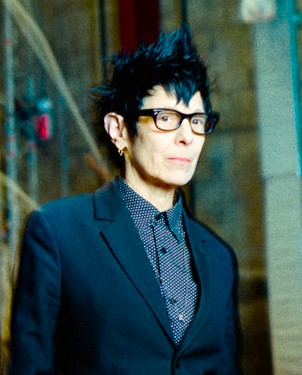
For over five decades, American extreme action specialist and professional movement artist Elizabeth Streb has been pushing the boundaries of the body and what is considered dance. Known for her daring installations, her presence across media, and the machines that shape her work, she spoke to ICONS about her journey of creating movement as action, her company Extreme Action and her method PopAction. She does not call herself a choreographer and shared her specific reasons why in the following interview.
Dance ICONS: How do you transition from a classical American dance background, like undergrad at SUNY Brockport, to founding your dance company Extreme Action?
Elizabeth Streb: To be honest, I was never a dancer until I went to SUNY Brockport. I just took that ballet class and modern dance, and I wasn't really interested in the history of modern dance. I've invented what we do, but it doesn't have to do with dance. STREB is anti-classical in that sense. When I went to SUNY Brockport to go to college, I just wanted to train my body to dance, but I didn't want to dance. I just wanted to develop my body to do the action I was interested in. SUNY Brockport brought people from New York City, and I wasn't “polite” because I thought I could ask questions; I was really a neophyte.
 ICONS: Can you define your creative approach and working method entitled “PopAction”?
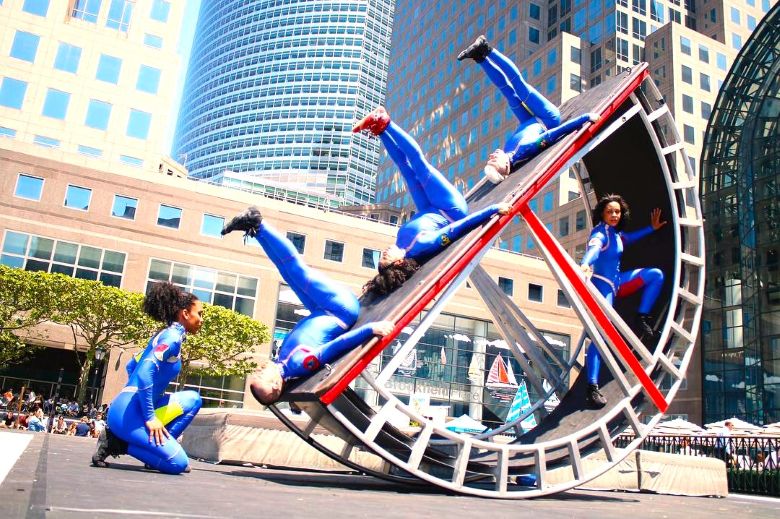
ES: PopAction was really my belief that everyone could move in any way, shape, or matter. I trained my body to do so. I also got conventional machines like a surf machine, a trampoline, etc. and then I would go on to develop new types of machines. When I go on the road, people think I'm a dancer but I'm really not. I just made up PopAction as a label for my approach, and I wasn't really expecting to be well known.
ICONS: Do you have specific works over the course of your career that define your approach to movement, that are quintessentially STREB?
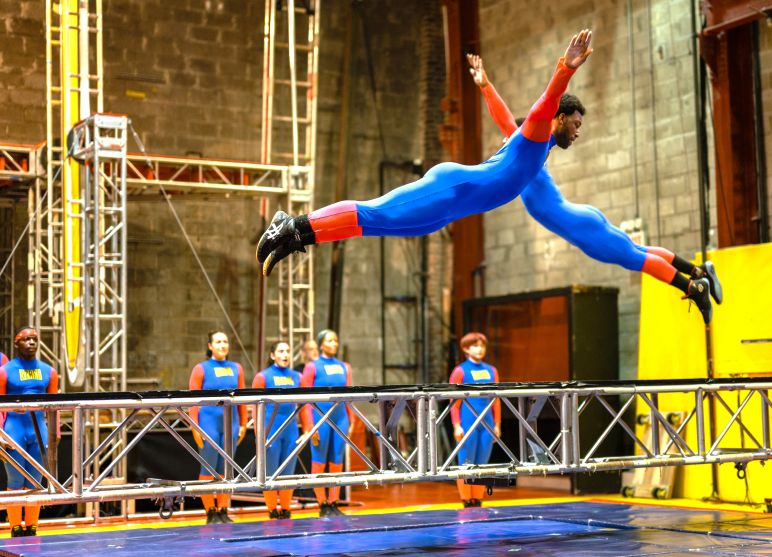
ES: Looking back—I'm 75 now—I stopped performing when I was 47 because I wasn't going to move that way anymore; I wasn't going to be that person. I think that it's better to look at the machines that I want in the room. One of the ones I started with is just a wall. I had dancers just slam into the wall to learn to use the capacity in which bodies can handle impact. When landing, the performers could land either on their stomachs, perfectly horizontal, or on their backs, perfectly horizontal. When they’re flying off something very high in one of the machines, by the millisecond, they have to memorize how it feels to be perfectly horizontal, so that when they make impact, they will just bounce off the mat and run away. My work that is quintessential STREB is falling from a high place, landing perfectly horizontal, and bouncing up.
ICONS: In the documentary Born to Fly, you say, “Anything that is too safe is not action.” Can you expand on that idea?
ES: It's just a true statement. Otherwise one is being too careful or too scared. When I used to go to dance classes, I didn't respect it that much. I just knew I had to get my body in place so that I could handle anything, but then who would I be copying? There wasn't really anyone who wanted to get to places in the space that I wanted to. So I built machines that added power. Really, I have just been forced to invent more machines rather than choreograph, so that every time it is more action than before.
ICONS: What are the physical training requirements for your Action Hero performers?
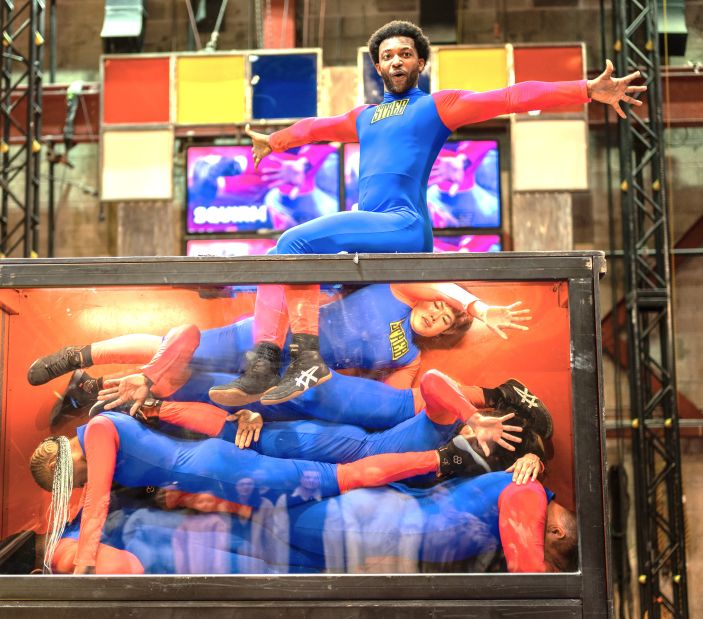
ES: They come into the studio and we audition them. I call them dancers, but I'm not really a dancer and neither are they. A lot of them are gymnasts, but all of them can handle the impact. I'm very disappointed in modern dance when it started in the 1920s because all of the dance companies are always on their feet and they absolutely ignore intensity and landing. They're careful on their feet. They sometimes carefully go down to their stomach or their back, but it's irrespective of impact. I think that there is no impact when I watch modern dance, not a bit. There's no danger. There's no capacity to see if there's any danger anywhere. I have invented these machines for my dancers to train on because I do expect them to be able to deal with that impact, and they rise to that challenge.
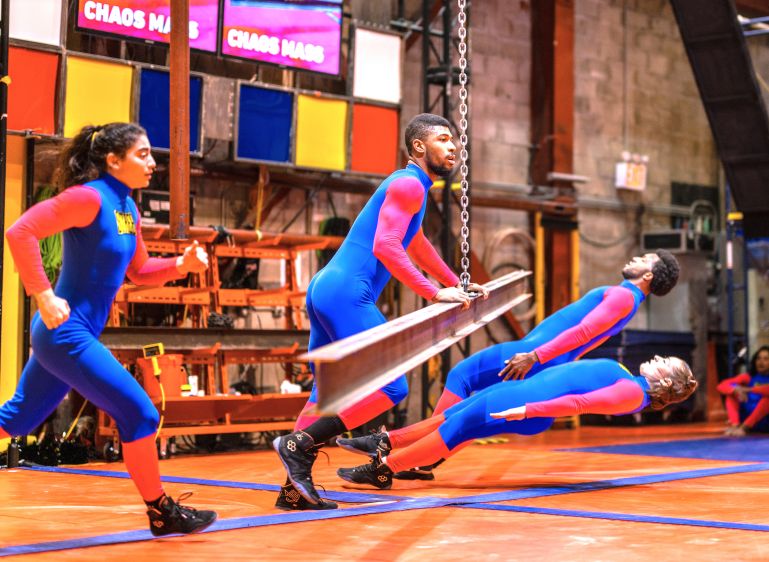
ICONS: Can you tell us about the offerings and goings-on at your training facility and performance venue in Brooklyn entitled SLAM – Streb Lab of Action Mechanics?
ES: Most importantly, we've got the company currently in 11 weeks of rehearsal for our spring show, which we don't quite have a title for yet, but we will soon. Our company rehearses four days a week and there's tons of exciting action happening when they're here. In addition, we offer classes in three separate styles: PopAction, trampoline for kids, and trapeze for both kids and adults. In addition to all of that, we offer rentals largely for circus performers, but anyone can come and rent the space here, and we have the ability to rig aerial apparatuses. There's never a quiet moment here at SLAM.
ICONS: How do you and your current Action Heroes deal with the fear of injury?
ES: Cassandre Joseph, who is my next in line, is very careful watching the dancers and takes care of them. I had lots of injuries, but I could always get around the injuries. We audition extensively so that dancers really know what they are getting into and that they can be prepared for what is expected of them. Right now, I feel like we have a spectacular group of dancers and that helps prevent injuries in the first place.
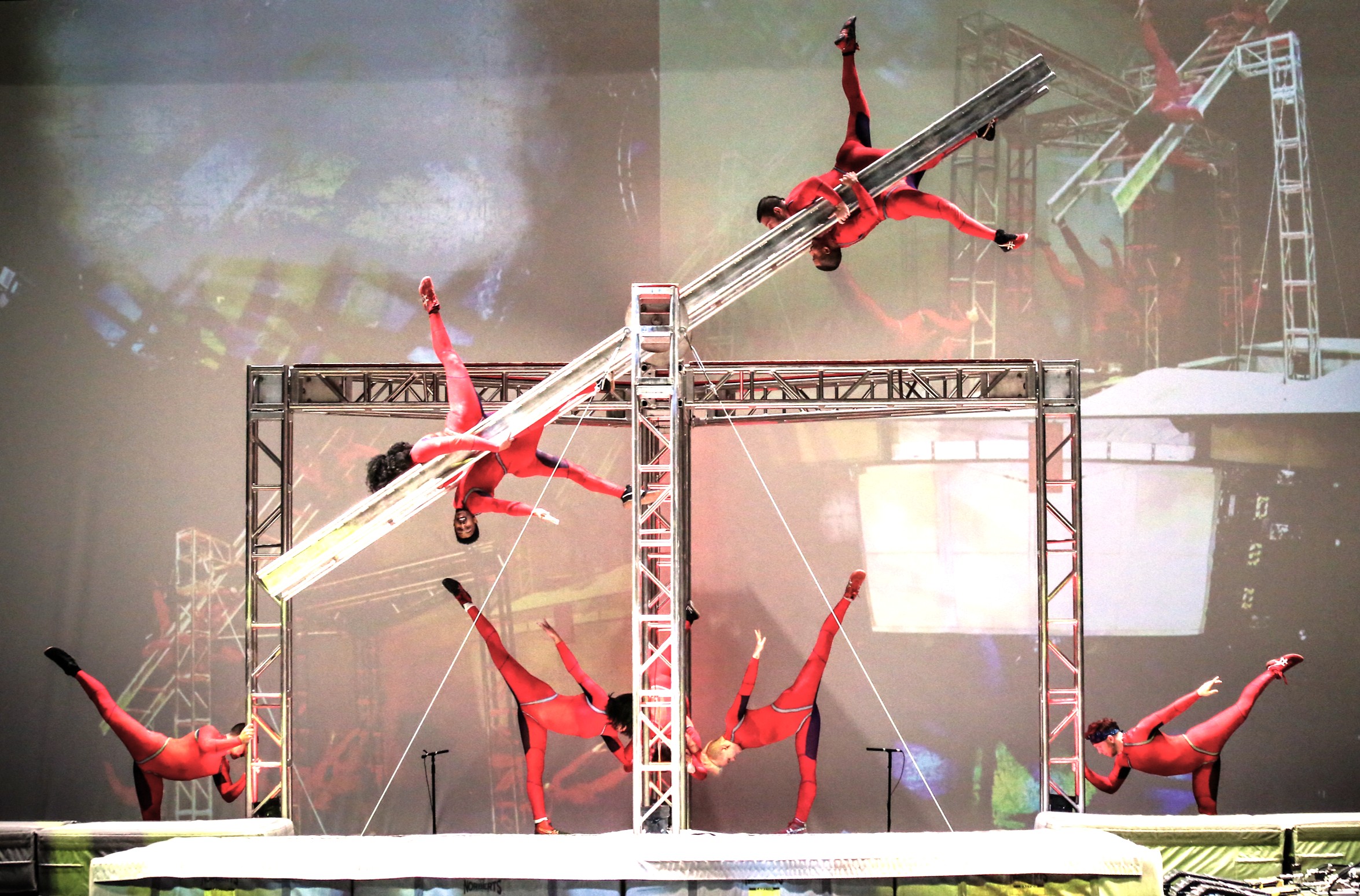
ICONS: Is choreography too small a word for the kind of work that STREB produces?
ES: Yes, because I don't think of me as a choreographer/dancer. I just don't do things that choreographers would do. One of my other quotes is, “music is a true enemy of dance.” Music is not the rhythm of action at all. One time we were exercising and landing from around 20 feet and then slamming into walls or the trampoline. And I realized that I wanted you to hear the effect of the machinery the dancers are on. I was really excited because it took meall these decades to understand what sound action makes with a body. Using music or any kind of sound is basically cheating. I mean we have pieces that have sound, but I am more interested in the sounds the dancers make in and on the machines.
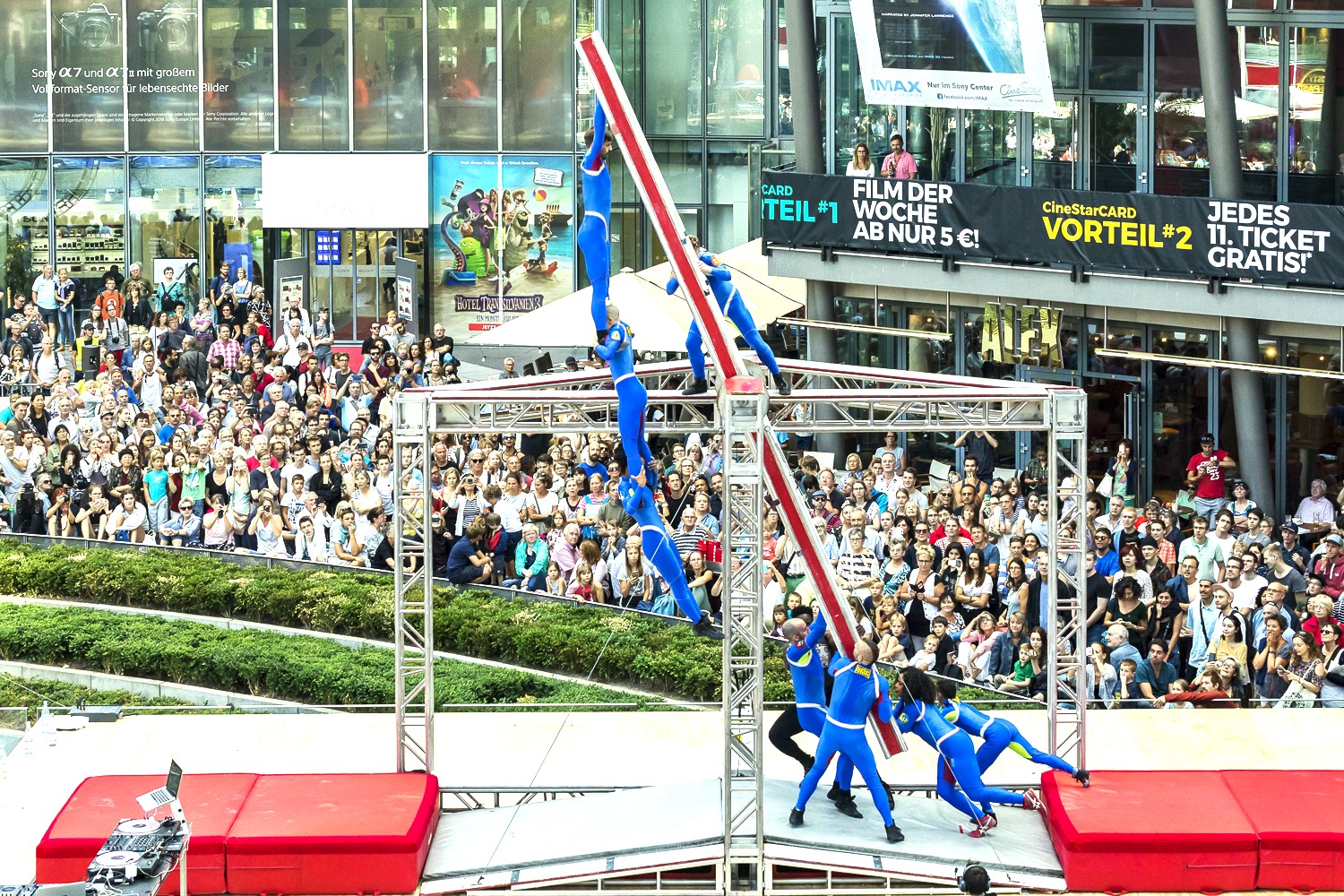
ICONS: Do you have advice for your younger self that you would have wanted to receive?
ES: Not really because I was just taking the next step. I would take what was happening and roll with it. I guess I do wish I had known sooner to get rid of music. It’s distracting; it's not what I
wanted, but it took me a long time because you go into a theater and that's what they expect for a dance booking. But that’s part of why I would say that I am not a dancer because my work became better when I stopped worrying about what dancers were doing.
* * * * * * *
Biographical information of Elizabeth Streb can be found here
Photographs (c) Lou Lex, Mikhail Lipyanskiy, Dajana Lothert, courtesy of Extreme Action/Elizabeth Streb
Video documentary and sample of work:
INTERVIEW'S CREATIVE TEAM ACKNOWLEDGMENTS:
Interviewer: Charles Scheland
Executive Content Editor: Camilla Acquista
Executive Assistant: Charles Scheland
Founding and Executive Director: Vladimir Angelov
Dance ICONS, Inc., March 2026 © All rights reserved
This digital resource and publication were made possible with funding from

