
Join the ICONS
Dance ICONS is a global network for choreographers of all levels of experience, nationalities, and genres. We offer a cloud-based platform for knowledge exchange, collaboration, inspiration, and debate. Dance ICONS is based in Washington, D.C., and serves choreographers the world over.
Subscribe today to receive our news and updates. Become a member of your global artistic community -- join the ICONS!
NOELLE KAYSER: RIGOROUS JOY
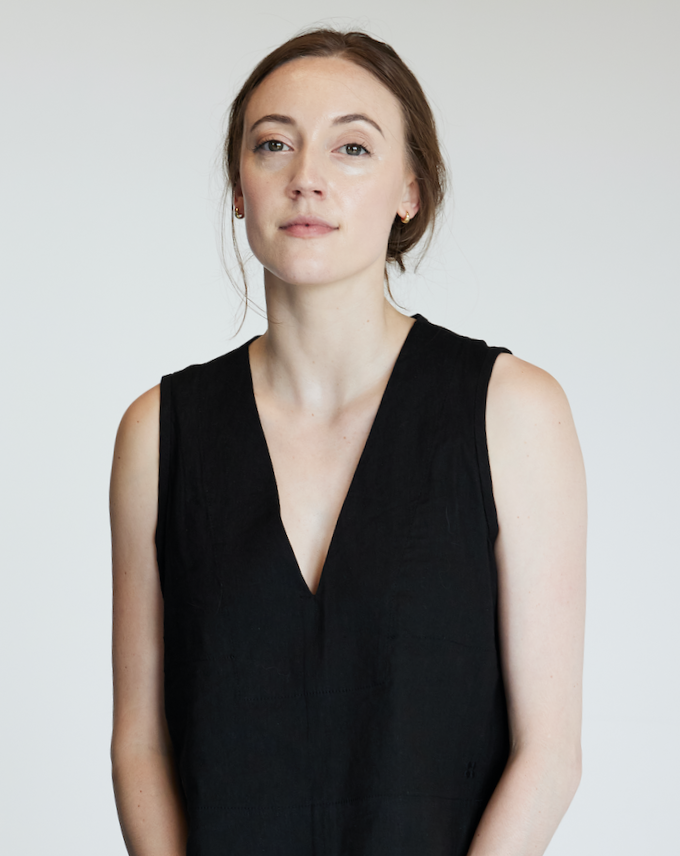
Award-winning choreographer Noelle Kayser first made a name for herself as a dancer with companies such as Visceral Dance and Northwest Dance Project, but her work has ranged into theatre and voice acting. Based in Chicago, she is now a sought-after choreographer and creative director bringing contemporary flare to classical specificity. She spoke to ICONS about the breadth of her creative practice and her continuing roles of both collaborator and mentor in her work.
Dance ICONS: How and when did you decide to become a choreographer?
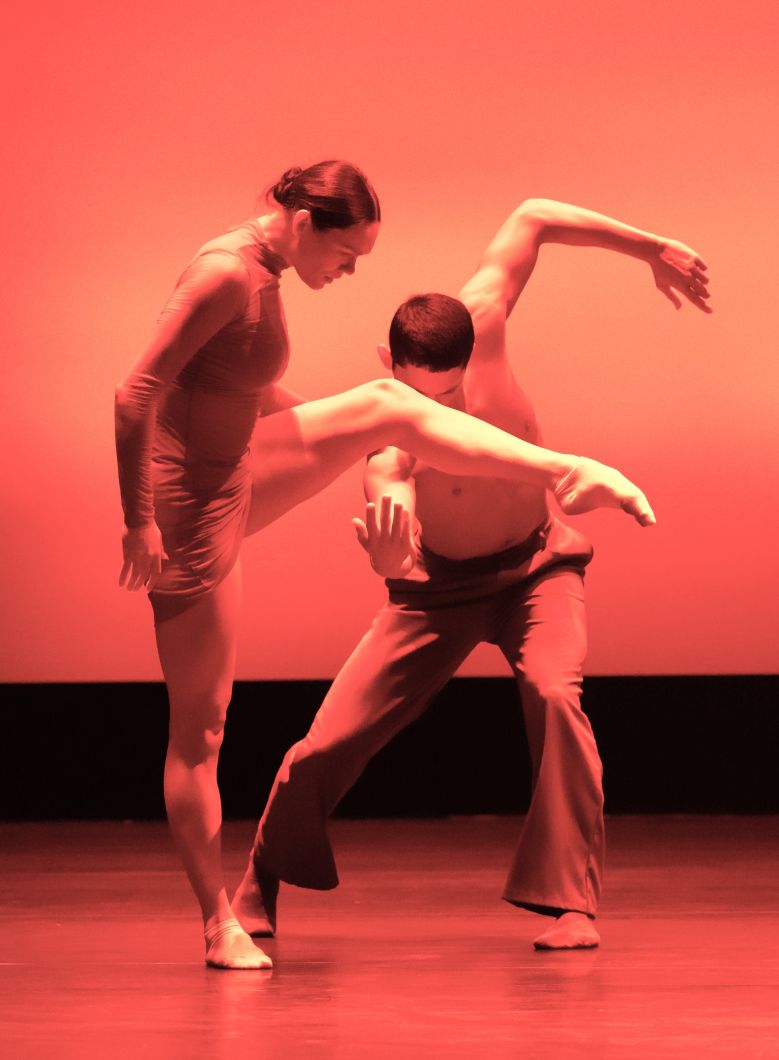
Noelle Kayser: Ever since I was little, I've always had ideas for dances. In elementary and middle school, I would write down all my dreams because I wanted to turn them into a “story ballet.” I ended up actually making that dance; it's titled “The Linemen Wright” and the most recent iteration premiered on Open Space Dance in 2024. Throughout my performance career, I felt at home in collaborative processes. Then there came a time where I just wanted to be able to see my ideas through to the end. That’s when I made the change to solely focusing on choreography.
ICONS: Are there specific choreographers or directors that you credit as influences in your work now as a creative?
NK: The first inspiration that comes to mind is Gustavo Ramirez Sansano. He has such a clear movement vocabulary and I'm so deeply inspired by the way that he personifies music. He ran the room with such generosity and respect. It was a super focused, joyful environment, and I try to emulate that. The next is Ihsan Rustem. I worked with him when I was dancing at Northwest Dance Project, and very similarly, I admire the clarity of his movement vocabulary. No matter who is dancing Ihsan’s work, it's still recognizably his. He has a wonderful way of calling people into his work, but it never loses the stamp of who generated it. His energy is impeccable. He's the first person to try to support somebody if they want to go somewhere, do something.
Finally, I was in a play a couple years ago at the Goodman Theatre here in Chicago, The Penelopiad written by Margaret Atwood and directed by Susan Booth, who's the Artistic Director there. As is the common thread, I loved how Susan led. She puts tremendous care into creating an environment where both people and art can thrive.
ICONS: How does your work as a stage, voice, and screen actor complement your work as a choreographer?
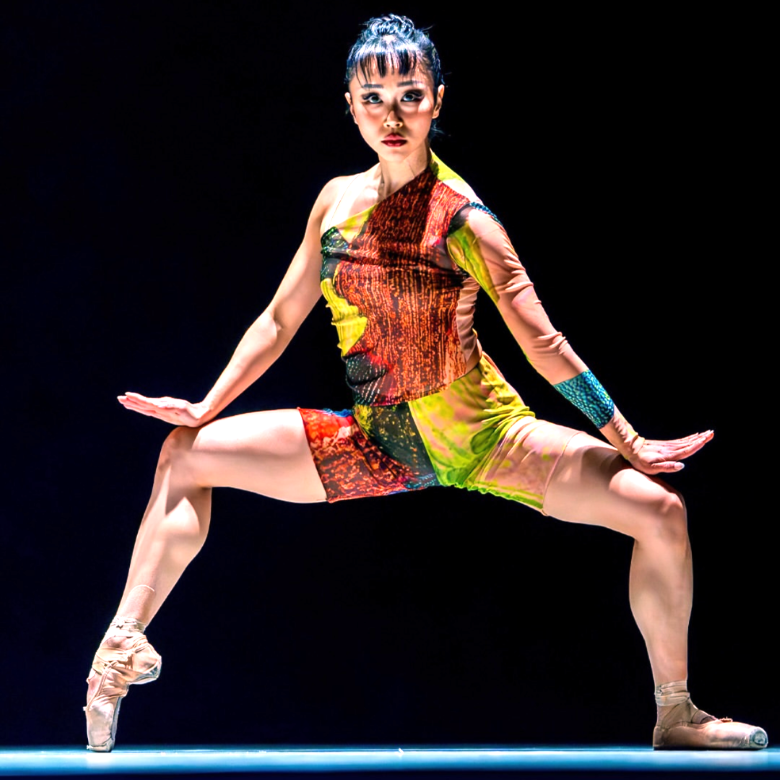
NK: I do a lot of prep prior to making any movement—storyboarding, visual inspiration, other research. Generally, I provide a lot of reading for the dancers. I like to come in with a substantial amount of phrase work to establish a language or a style that we're moving in. From there, I build it very much like I've witnessed plays or films being made. When I coach dancers, I coach them like a lot of theater directors I've seen: talking about internal processes and decision-making, asking why all the time, even though sometimes the answer is “because I want to,” but if that’s the case, at least we've owned that.
ICONS: How would you define your movement style?
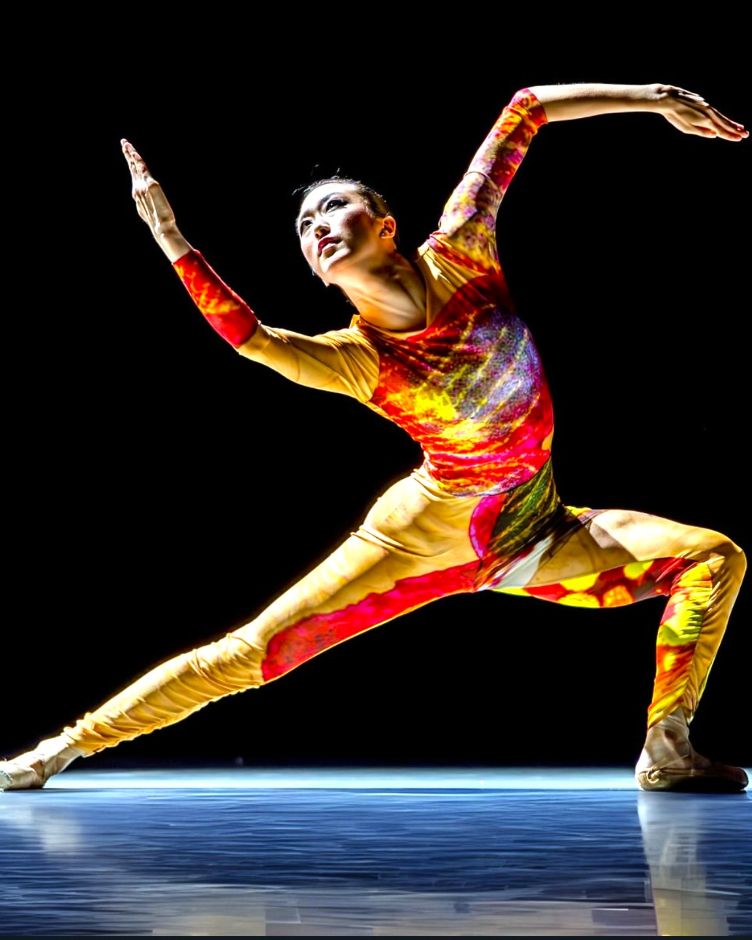
NK: I think it's currently, and may always be, in development. Some words that I've consistently heard reflected back to me are hyper-specific and detailed. As an example, for my piece on BalletX, the work was based on the fingers and the angles of the wrists being held in a certain way to emulate scales on the wings of a butterfly (also the title of the work). That movement modality was essentially our sole focus for the entire residency. I think my work has a lot of emotional and physical rigor and my material reflects my path—it has a base of classicism with layers of abstraction and contemporary forms.
ICONS: Tell us about your continued collaboration with BalletX and your position as Choreographic Fellow.
NK: That was such a wonderful experience; it totally exceeded my expectations. They paired me with a mentor, Marguerite Donlon, which was amazing, as sometimes choreography can be a bit isolating. I first worked with Marguerite when I was 23. She taught me so much then as a dancer and is teaching me so much now as a choreographer. We talked a lot about the art as well as the logistics of being a choreographer. Christine Cox was also an invaluable guide throughout the process and continues to be a source of support and encouragement. Being given and trusted with resources is incredibly special. The chance to have a month and a full team to make something gave me time to really experiment and push myself creatively. Also, the BalletX dancers are insane. They have elite classical technical ability but can move like grounded contemporary dancers, so there just isn't a limit to what you can imagine.
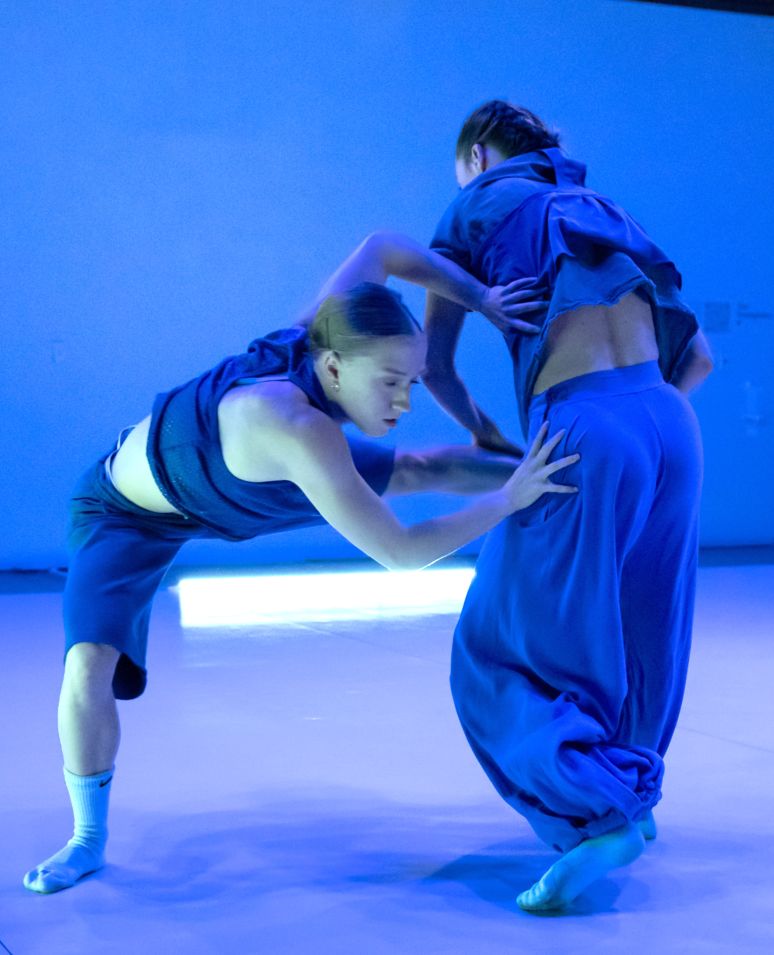
ICONS: You were the first resident choreographer of Open Space as well. What can you tell us about that relationship and work?
NK: I love Open Space! Franco [Nieto] was my colleague at Northwest Dance Project, and then when he founded Open Space, I did a project with him as a dancer. At the time I was beginning to shift my focus to choreography and I asked him if I could do a fake show in his space so I could get some footage that looked professional. I said, “Can we just get people to sit in here to make it look like a sold-out show while I do my dance really quick?” He said, “Well instead of having a fake show, why don't we put your choreography in the real show?”
After seeing my work, he established the resident choreographer role. Franco has become a close collaborator. He and I are able to riff off of each other in a way that you can only do when you've known someone for years. In addition to being a choreographer, he’s a fantastic costume and lighting designer—his feedback absolutely makes my work better. This summer he is presenting his first full-length work and I'm going to be his dramaturg. We switch off leading and following in a fun way.
ICONS: What inspires you to create new dances?
NK: Many things! Sometimes it’s biographical, sometimes it’s a question, sometimes it's art from another discipline, whether that's poetry or sculpture or music. For example, thus far, I've made three installments to my ongoing "LIVES & WORK" series that focuses on iconic female artists throughout history—fragments (Sappho), Stone & Soil (Camille Claudel), and anonymous (Emily Dickenson). I make a folder for each idea that comes to mind; whenever I encounter something that I feel pertains to one of those ideas, I just keep adding notes to the folder. When I’m preparing for a commission, it becomes a game of matchmaking. Which folder fits with this company?
 ICONS: How has it been carving out a space as a choreographer based in Chicago specifically?
NK: Chicago has given me a home to simply focus and work on my craft. I have always felt so held here, whether that be when I was working with the late great Claire Bataille as a scholarship student at the Lou Conte studios, then Gustavo at Luna, then Visceral, or now at South Chicago Dance Theater in the role of Artistic Liaison. The Cambrians, Dance in the Parks, the work I do with the Lyric Opera and the Goodman Theatre—there's always been a room that I've been able to go into and practice. It's a city that people are always in and out of, so I feel very connected to the world here. I think the dance community here is really generous and strong and creative and scrappy. I like flying away and feeling like I'm bringing new knowledge home to feed this community with.
ICONS: An emerging theme of this interview has been mentorship and collaboration. Is there an excellent piece of advice you have received that you want to pass long?
NK: It wasn't necessarily verbal advice, but the best example that has ever been set for me has been my father. He was a lifelong theater actor in Atlanta, Georgia. He emphasized the joy in the action being your focus versus the joy in the result. Can you place your joy in rehearsal or class in and of itself, the nitty gritty, the most rigorous part, the part that you receive the least praise for? Can that be what you enjoy and look forward to?

* * * * * * *
MORE INFORMATION ON THE WEB:
Available here
PHOTOGRAPHY CREDITS:
Portrait and performance images: © Ashely Chapel © Zingzi Zhao © Scott Sergio © Mathew Thomas
VIDEO SAMPLES:
INTERVIEW'S CREATIVE TEAM ACKNOWLEDGMENTS:
Interviewer: Charles Scheland
Programing Manager: Charles Scheland
Content Editor: Camilla Acquista
Founding and Executive Director: Vladimir Angelov
Dance ICONS, Inc., April 2026 © All rights reserved
This digital resource and publication were made possible with funding from

